Tuesday, July 19, 2016

We're Surrounded

  I   t's always puzzled me: these scientists on this rabid quest to find life on other planets. What are you gonna do, guys, when you find the life? You're gonna fuck it like you've fucked the life we have.

And we have so much life! We have life on every square millimetre of this planet—and all the way to the edge of space and to the bottom of Earth's crust, there is life. In fact, you could say that Earth is just one huge organism, which it is—in the Great Oxygenation Crisis cyanobacteria came along and produced oxygen, which killed 99% of the life that was living at the time, because they were all anaerobic. In other words, the bacteria destroyed the lungs of the planet and changed them into oxygen-loving lungs.

And then, the life adapted. The huge amounts of oxygen in the air enabled giant life forms to evolve; giant dragonflies the size of small eagles.

So why don't the scientists turn their attention to the enormous amount of life we have right before our very eyes—in fact, ALL OVER our very eyes.

I was cleaning some cilantro just now and thinking about what I was holding in my hands: a magnificent edible plant with its own unique character that evolved over millions of years to be this way, to taste this way. And only this plant tastes like this; for reasons that no one can possibly know.

And what will they find on Mars? They won't even find the smallest protein or amino acid, and they surely won't find a bacterium. But why do they care? Why not study Earth and all its magnificent progeny?

All life came from bacteria, billions of years ago—and viruses.

People, even knowledgeable people, seem to get very confused when confronted with bacteria and viruses. They really don't seem to know the difference, so they ask for antibiotics when they get a cold. This is ridiculous, as is the notion that if you're wet in the cold, you'll catch a chill. The cold does't give you a cold; viruses give you a cold.

So what is the difference? If I had to qualify bacteria and viruses, I'd have to say that bacteria are tiny animals with no brain that are simply surviving for one purpose: to reproduce. Collectively, they form a brain, like a vast beehive. They're aggressive, but careful. They want only to live, to reproduce.

Viruses, on the other hand, are simply brainless bundles of proteins that are wrapped in bad news. There are actually disputes as to whether or not they can even qualify as being alive. Perhaps they're more like vitamins, or minerals. Non-living but reproducing nonetheless.

But they aren't too concerned about protecting their hosts; they don't care if their host dies; they just want to reproduce until they can't reproduce any more.

Bacteria and viruses survive side by side, but they're like the Irish and the Italians in 1920s Chicago. They agree to disagree, but they divide up their turf peaceably, because it's business.If they went around just killing each other, they'd all starve.

I've just received the results from my second biome test, and they're extremely puzzling. They're not at all what I expected.

But that's for next time. Do the study on the difference between bacteria and viruses, and remember: you are literally swimming in an ocean of invisible life. Don't worry about aliens.

They'e already here.

Tuesday, July 12, 2016

Deadly New Virus Warning

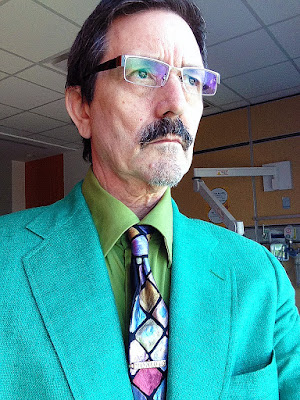
Asparagus Syndrome victim
  I    rarely comment on things that are not biome related, but I feel the need to point out a dangerous new virus that seems to have originated in Japan.

It goes under various names, among them "TinyHead virus" and "Head-shrinking virus" but with a bit of sleuthing, I have identified the true culprit to be a cellular-phone virus originating from something called "PokemonGo v.1.0."

I have, for the sake of pronounceability, renamed the virus "Asparagus Syndrome."

Asparagus Syndrome is characterized by the rapid fashion in which victims are overwhelmed with spontaneous microcephaly (shrinking of the head) and an  overpowering urge to keep a cellular communication device six inches from their face at all times.

The main risks from Asparagus Syndrome are not caused by the disease itself but rather by injuries sustained from walking into stationary illumination installations (SIIs), more commonly known as lamp-posts.

If you suspect you have had any recent contact with a Japanese person, Japanese people or products originating in Japan, the CDC recommends either avoiding the usage of all cellular communications products, or as a last resort an emergency head transplant, available at most witch doctors' nationwide.

Monday, July 11, 2016

What Osama Bin Laden Taught Me About My Microbiome

  O  nce, a long long time ago, I had a Great Job.

I'd get up mornings and shuffle from bed into the living room and over to my computer.

I'd drink my coffee (or a beer—I wasn't choosy at the time) and play with my mouse all day, putting pretty pictures on the screen, writing giggly things and then digitally crumpling them up.

Then, occasionally, I would summon The File, and carefully erase the figures entered in it with new figures, save it as a PDF and then send it off in an email.

There. I might have just sent off an invoice for $12,764.54.

No, really. Happened all the time.

Maybe not $12,764.54, every time—maybe just $453.21, or $76.87, or $5572.83—you get the picture.

I usually just made up the figures out of thin air. How much aggravation should I bill them for this time? And then I'd type out what looked to be a very carefully calculated number—except that it wasn't. I'd just make it up, right there, right then. The only calculation I did was how many jackets, or stereos, or TVs, or cameras, or restaurant dinners I'd buy with my winnings.

I was, from 1996 to 2001, the sole graphic designer for the entire company of Air Canada Cargo. Not Passenger, you understand—Cargo. But Cargo was pretty big. It occupied an entire floor at The Base, at Dorval Intl/YUL, or in the unmarked Air Canada building in Vendôme, where it moved later on.

I did all their ads, all their newsletters, all their posters. All their brochures, all their business cards, all their logos, all their calendars. And finally, I singlehandedly designed Air Canada Cargo's first-ever website.

All out of my home, in my slippered feet, with a beer or a coffee at hand, day or night, day in, day out, for five glorious years. And I raked it in. They had dumped the ad agency they had been dealing with before me in disgust, and I had somehow stumbled onto the job because a friend was the son of one of the top managers there.

It was a great partnership—I dealt with a tiny group of Air Canada Cargo people and they told me roughly what they wanted and I made it happen.

I was having the time of my life, making more money than I'd ever seen before, looking forward to a rosy, $$$-filled future.

And then Osama Bin Laden brought it all crashing down.

Air Canada's recent run of profitability—one could say profligate profitability, since they seemed not to care too much whether I charged $8,762 for a calendar or $12,987—ceased right then and there on September 11, 2001.

The towers fell on Tuesday, and I was out of a job by Friday. "You understand," my boss said regretfully, "there's no way we can continue to spend like this now. We're going to bring all this in-house."

So what was the problem? Get another job!

Not so fast! During the time I had spent with Air Canada I has scrupulously avoided moonlighting—I hadn't wanted anything to get in the way of The Job. I didn't even want rumors of my having other interests to reach their ears—I created montrealfood.com in complete secrecy while I was working for them.

So my job diversity had been limited to one, and now that was gone.

And what, you might ask, does that have to do with my microbiome? Diversity, diversity, diversity.

This article points out, rightfully, the perils of removing whole categories of foods from your repertoire.

Remove gluten, for example, and the bacteria that prefer gluten—bifidobacter, for example—might diminish and let other bacteria, say, prevotella, move in.

Since the jury is still lunching at McDonald's about all of this, we have no idea what a gluten-deficient diet will actually do to your microbiome, especially if your normal state has always been glutenous.

It's been reconized that a healthy microbiome is a diverse microbiome, and that makes sense. In lean times, when a particular food, say, sugar, was off the menu for the hunter-gatherer dudes that the Paleo Diet so wants to emulate, the diversity of their repertoire swallowed the gap quickly and with little overall effect. When the honey suddenly became available again, the population adjusted quickly, as a smaller segment had to be moved around; the prevotellas didn't particularly mind being reduced from 1.75 trillion to 1.24 trillion.

And one notable characteristic of the Western diet compared to more primitive diets like the Hadza tribe, is a severely curtailed repertoire of bacterial diversity.

So if your microbiome's diversity is small to begin with, as is the case with most of our western diets, then the removal of a whole food group—gluten, say, or fats—will have far more signifcant consequences on the population as a whole.

Looking back now, I was a fool to put all my cards into the Air Canada pot. I had nothing to fall back on, and no alternatives waiting in the wings. It would take years for me to regain my earnings levels—years that continue to this day.

The lesson I learned, in work as well as diet, is keep a lot of options open. The more cards you have on the table at a time, the less you're going to miss it when a few—or all—are removed from the equation.

Thursday, June 30, 2016

Results!

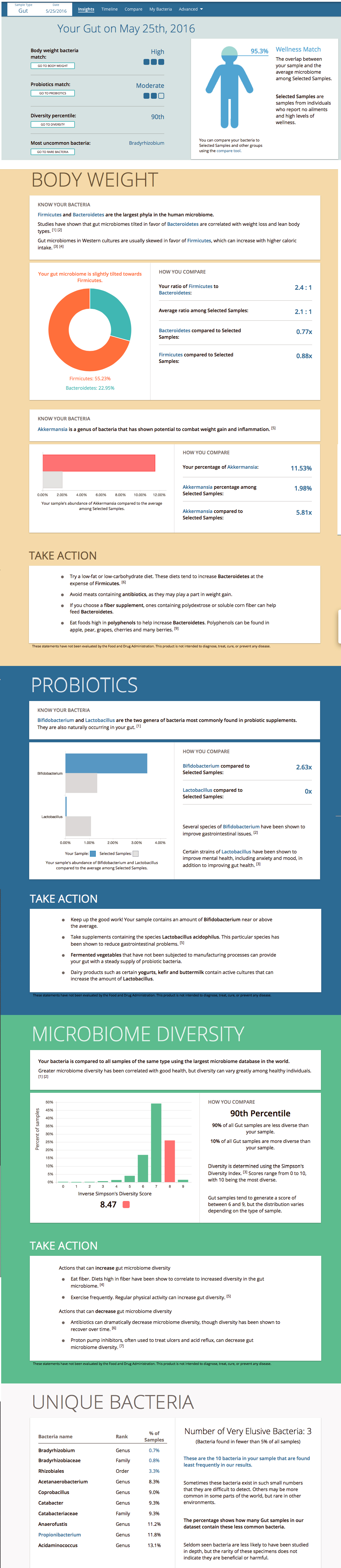
  F  inally, my results have come back from uBiome.

Click here to open the basic first screen of my results (in the new window, click on the image to magnify it).


I haven't had time to analyze it all quite yet, but from what I can see, it's all completely unexpected.

One reassuring result is that I'm in the top ten percent of "healthy" human beings . . . that is reassuring to know (you will recall that this sample was taken after two weeks of eating my "normal" diet, before I started cutting my fats, sugars and carbs and adding pre- and probiotics).

Someone more qualified than I is taking a look at the results and will be back to me shortly.

I'll keep you posted!

Sunday, June 26, 2016

Plus Ça Change

Docteur Neeque: at the frontiers of medication
  I   n case you don't speak French, that means "Plus that change," which is referring to the extra coins in your pocket in addition to the coins you've been using to feed the parking meter.

All Froggy lessons aside, it has come time to examine where I am in the Grand Biome Experiment of 2016.

Where, indeed!

You will recall the following:

I spent two weeks eating my normal diet.

I took a sample and sent it in to be analyzed by uBiome.

I spent a week consuming no meat, gluten, dairy, sugar, and pretty much everything else that Makes America Great. This was the longest week since weeks have been recorded—since the third week of Hatshepsut IIV, 5976 B.C. (="Before Coke")

This phase was called, in case you have forgotten, "Phase II."

At the end of this phase, I remarked upon the seemingly dramatic remission of my psoriasis.

During the fourth week, confusingly called Phase III, I began introducing pre- and probiotics (in the forms of pills, powders and elixirs) began a daily vitamin regimen and cautiously reintroduced my old diet (minus a few questionable items such as the Doritos Mammoth-pak Chipstravaganza), with the sole exception of one item per week absent; the first week, for example, I did not reintroduce dairy, the second, I removed gluten etc. in a bid to see which, if any, had impacted my psoriasis.

In case you have not been counting, we are now at the first day of Week 8; on this day, seven weeks ago, the entire experiment commenced.

So what is my conclusion at the end of all this?

Well, there are several.

The first one that I came to was that starting from scratch with a diet based on exclusion—no meat/wheat/dairy or sugar was not doable, at least where these products are sold. However, it was never my point to eliminate any of these foods from my diet permanently; my goal was merely to clear them from my system in order to allow the next phase of the experiment to proceed relatively uncontaminated.

One major disappointment from this phase of the trial was the lack of actual perceivable differences from the regular experiences of my hitherto day-to-day existence.

I did not suddenly have seven times more energy, sleep twice as long, or remember all the lyrics to "One More For The Road." I could not suddenly play the guitar faster, I did not have amazing, colourful, flower-filled dreams. I did not lose ten pounds in two weeks—it was more like ten days (but that was not one of my goals, either).

On the other hand, no memorably ill effects resulted whatsoever during that period. I felt, for the most part, perfectly fine. My energy levels were very good. I slept fairly well; that is to say, with no unusual insomniacal episodes.

I had no gastric adventures whatsoever, apart from some mild constipation. No bloating, gas, reflux . . . well, 'nuff said there.

But now, while not exactly the bad news, the unexpected news: after my initial, amazed perception that my psoriasis had been going away, I discovered that it certainly had not been. It had merely retreated, in one of its timeless cycles of boom and bust.

Thinking that it might have been the reintroduction of one or the other things I had removed, I again took out dairy for a week and then gluten for another week; yet the psoriasis came back with a vengeance.

I'm disappointed, but not discouraged. The goal of this entire project really had no aims to remove my psoriasis; if it had happened, great, but that was not the point. I will have to do some other, more specific experiments to deal with that.

The point of the project was to see what was going on with my gut biome, to see if it could be altered for the better, and indeed, if my overall health could be improved in a noticeable way.

Well, I will say that one of the most important takeaways from all this has been that it can be done.

It can not only be done, but it does not have to be an ordeal; you can improve your diet ten-fold and still not feel like a granola-crunching spirulina-vegan tree-hugging homeopsychopath.

No; one of the most important things this whole experiment has taught me is to be mindful of the things that I put in my body.

What goes in today may not matter very much today; indeed, in the larger scheme of things, it does not.

But we are not merely solitary human beings going about our solitary business, eating our solitary meals and at the end of the day, left with our solitary selves.

We are accumulations, as we have seen, of trillions upon trillions of constantly interacting tiny organisms that are entirely dependent upon our "solitary" decisions upon what to feed and what not to feed them, in order that they may work to make us function at the top of our games, for, without us, they do not exist either.

Everything we do has consequences; today's Happy Meal becomes tomorrow's pound of ugly, yellow,  greasy adipose tissue, oozing its inflammatory toxins into the river in which all of our organisms must swim; polluting the very powerhouses that enable us to digest, to breathe, to feel, to think, and to be healthy.

Out of sight, out of mind, but not out of body.

That Diet Coke, that Dino-Pak theater popcorn serving with extra fake butter/polysorbate 60/FDC Red #5/guar gum, that packet of Splenda in your Lipton Iced Tea mix . . . perhaps not today, not even tomorrow, not even next year, but ten years down the line, when all the good guys have folded up their tents and gone home in disgust, that's when all this crap will be sitting up, taking a look around, and declaring the All Clear.

I hate to bring up that new buzzword of the day, "mindful," but I have learned, if anything, to be mindful of every single thing, big or small, that I consume, every single hour of every single day.

I never eat something I know to be unhealthy without pausing, asking myself if I really want to do what I am doing, or otherwise thinking about it, and that is something that I tended never to do before.

But perhaps most eye-opening of all is the realization that this project is not over. In fact, it has barely just begun.

I will keep on experimenting, being mindful, tinkering with this mix and that mix, and keep reporting back from The Biome.

Phases I-IV are over. But I have no even received back even one of my Biome samples, so when I do . . . get ready for Phase V—the Reckoning.

Friday, June 17, 2016

Biomechanic Calling: My Strawberriness be Upon You


  I   s there anybody out there?

Here, it's just Biomechanic and my quintillion pals, parsing the gravitons and hunting and gathering amidst the microbial mangroves.

I bought this.

It's a start—I may yet make it to medical school. Or rather, my quintillion pals might make it to medical school (on a gurney).

Honestly, graduating from med school—probably McGill—I'd be about 65 years old and raring to become a resident in some country clinic in Nunavut. Better brush up on my Cree! I don't think my Japanese will come in handy up there, どう思いますか?

The quintillions are restless.

I've been sticking to my regimen of prebiotics and probiotics and vitamins
The vitamin-mineral regimen started on Day One, Phase 2
every day. I haven't skipped a single day of feeding the Quintillions, but I can't say as how they're exactly happy.

Because I quit gluten last Sunday.

Yep—just wiped it out. Not a molecule of whole wheat, cracked wheat, whole grain, rolled grain, fried grain or boiled grain has passed my lips.

So my convenient pita dinners—*poof.* My convenient pita chips and salsa: *shazam.*

I've been scrambling to adjust.

It's just another Nixperiment—by now you'll know what that means—and it's gonna take time. Time to establish whether or not it's gluten that's exacerbating my psoriasis or not.

You might recall that on May29th or so I went cautiously back to my old diet, but with the twist of adding the prebiotics, probiotics, vitamins and keeping down the sugar to fruit/honey only, but allowing both dairy (kefir, 2% goat's milk—for no other reason than it's goat's milk and that sounds cool) and gluten (aforesaid whole wheat pita snacks, whole wheat pita dinners) but shortly thereafter the psoriasis exploded.

So for one week after, I quit the dairy, except for the kefir (which I have with the Prebiotin and Baobab powder in the mornings with my vitamins)(stop laughing, you hounds!) and . . . the psoriasis did NOT go away.

It just got worse. Fingers bad, spreading to my face—very bad.

So The Quintillions had spoken. *DiTch the gluten, dude, that's what everyone*else is doing!*

(You have to speak Quintillion like I do—just think of a quintillion voices all saying the same thing in a trillion different languages and you're making progress. My translation above is the best I can do; sorry.)

How's it going?

Very badly. I can't seem to find a replacement for the pitas.

It must be easy to make, satisfying to eat, repeatable without boredom, not be overly messy or create too many dishes or require many steps (microwave, sauté pan, toaster oven) and still be able to be relatively long-lived when stored in the refrigerator.

See the conundrum? I'm not out to make a dinner for today, or even tomorrow. I'm out to make a dinner that I can make again and again without fear of what I'm doing to my body—too much salt/sugar/fat/acid/blahblahblah and I have not even come close to finding anything that fits the bill.

I tell you, I had it in the pita thingie—it fit all the parameters—except for the fucking gluten in the pita.

I tried corn tortillas; horrible. Too fucking small, they break apart very quickly with anything hot and you end up with a mess in your bowl that you have to eat with a fork.

I know, I know. My nickname is ChefFuckingNick. I'm supposed to be able to whip up creations in a zippy. But YOU try no gluten. It's impossible!

Still, I have to stick it out. Maybe . . . two weeks? Just to see if the psoriasis stays or goes.

I can see the Quintillion, making 'markable analyzations in The Trial of The Millennium . . . does the glove fit? If not, you must acquit!

My go-to saviour has become the strawberry. I put them on everything except dinner. I put them in my water, on my gluten-free crackers, I put them where the sun don't shine.

Strawberries to salve the anxieties of The Quintillion, strawberries to soothe their hundred billion little souls so they can live out their frantically brief existences in relative Strawberriness . . .

StrawberryWorld has become their universe!

I monitor Brigitte and try to bless her quintillions with my Strawberriness, and it seems to be working.

I did my second sample and will send it in presently. Jennifer of uBiome has extremely graciously offered me the extraordinary deal of five (5) tests that normally cost $399 for only $89.

This is an incredible opportunity to see just what is going on with The Quintillion; it's possibly more valuable than an MRI. CT scan, X-Ray, biopsy and colonoscopy ALL ROLLED INTO ONE PAINLESS TEST.

All you need to do is email Jennifer, mention me and if her Quintillions are in StrawberryWorld, she might just *adjust* your tests to be all gut tests (instead of skin, oral and so on) if your Quintillion asks her Quintillion nicely.


Meaning, just mention me and Wizardess Jennifer will wave her wand and change your order for you . . . if she's been Biomechanicking nicely and she's in a good mood.

That's where it stands.

Tests are boring. Tests are long. Tests are stressful and results are always . . . soon.

But I must be patient; not become a patient; maintain my Strawberriness for at least one more week, and the gavel will come down in the Court of the Quintillion King and judgment will be passed.

Gluten or no gluten?

I breathlessly await.

I bless your Quintillion with my Strawberriness.

Tuesday, June 7, 2016

Weeks 1-5: The Sequel

  T  his is a chart of the five weeks I was documenting this experiment. The first two are me on my normal diet. The third is my "Week of deprivation": no wheat, no dairy, no sugar. The last two weeks are my per/probiotic rebuilding (limited, structured wheat/dairy/sugar).


Right-click image to open in new window (fine print still will not be legible)


Notes: The light blue blocks are sleep. The light green blocks are naps.